Choosing livestock is one of the most exciting parts of building an aquarium. It’s also where careful research makes a difference. Start with animals whose needs match your tank, equipment, experience, and available care time.
A beautiful animal deserves a suitable home. Before buying, look beyond color and price and understand what keeping it involves.
1. Start With Your Aquarium
Review your aquarium size, layout, lighting, filtration, and water movement. Think about the space available once your animals grow.
Write a stocking wish list before shopping. This gives you time to research each animal and check whether your choices work together.
2. Research the Exact Animal
Common names and broad labels can leave out important details. Ask for the animal’s identification and research its specific requirements.
Before purchasing, find out:
- Its adult size and space requirements.
- What it eats and how often it needs feeding.
- Its preferred water conditions.
- Its behavior and compatibility concerns.
- Any special lighting, flow, or habitat requirements.
- Whether your aquarium is established enough to meet its needs.
If you can’t explain how you’ll care for it, keep researching before buying.
3. Choose Corals Beyond Their Color
For each coral, research lighting, water movement, feeding, placement, and room for growth. Learn whether it may affect neighboring corals and how much space to leave around it.
Labels such as soft coral, LPS, and SPS are useful starting points, but they don’t replace research into the particular coral.
A small frag still needs appropriate care. Its size doesn’t automatically make it an easy beginner choice.
4. Think About Compatibility
Consider the whole aquarium when choosing an addition. Research whether a fish may bother other inhabitants, whether an invertebrate has specialized feeding needs, and whether corals will have enough space as they grow.
“Reef-safe” and “peaceful” are starting points for research, rather than guarantees. Check the exact species and consider your existing livestock.
5. Plan the Order of Your Additions
Build a gradual stocking plan instead of buying your entire wish list at once. Research whether introduction order matters for the species you’ve selected.
Allow time between additions to observe behavior, feeding, and water conditions. Adjust your plan if the aquarium or its inhabitants show that something needs attention.
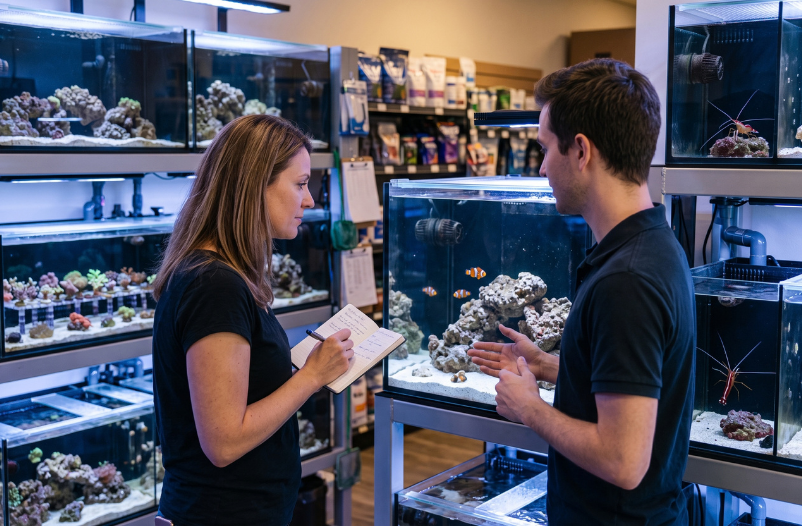
6. Ask Questions Before You Buy
Useful questions include:
- What is the exact species or coral identification?
- What conditions is it currently kept under?
- What is it eating?
- Are there any care or compatibility concerns?
- What acclimation guidance applies to this animal?
- What should I prepare before bringing it home?
A good purchase begins with enough information to make a thoughtful decision.
7. Prepare for Arrival
Have your acclimation and quarantine or observation plan ready before purchasing. These steps serve different purposes: acclimation helps an animal transition between conditions, while quarantine provides separation for observation and an appropriate health-management approach.
Use guidance suited to the animal and its transport conditions. Avoid assuming one procedure works for everything.
Your Before-Buying Checklist
- I know what the animal is.
- My aquarium can meet its care needs.
- I have considered its adult size and growth.
- I have researched compatibility.
- I have the right food and supplies.
- I have a plan for introduction and observation.
- I can commit to its ongoing care.
If something doesn’t fit, choose another animal or wait until you can provide what it needs.
How Fishfanatix Can Help
Our current focus is coral frags. We’re here to help you ask useful questions and relate what we’ve learned in our coral systems to your aquarium at home.
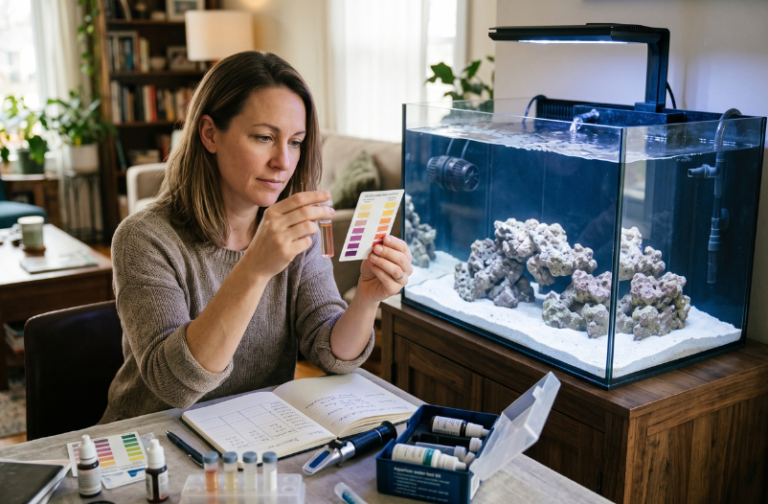
Tell us about your tank, how long it has been running, your lighting and flow, recent water-test results, and existing livestock. Those details help us discuss whether a coral may fit your setup.
There are many ways to keep a successful reef. Our goal is to share practical experience, explain our reasoning, and help you make informed choices as you develop your own approach.
Keep Learning as Your Reef Grows
Finish your first additions slowly and keep observing, testing, and learning. Visit Reefkeeping Tips & Guides for more education, or Contact Us if you have a question about choosing a coral.