
Before You Buy: Planning Your First Saltwater Aquarium.

Before you buy your aquarium or its first inhabitants, think about the kind of saltwater tank you want, the space you have, and the time and budget you can commit to its care. Planning ahead helps you choose equipment that fits your goals and livestock whose needs you can meet.

Start with these questions:

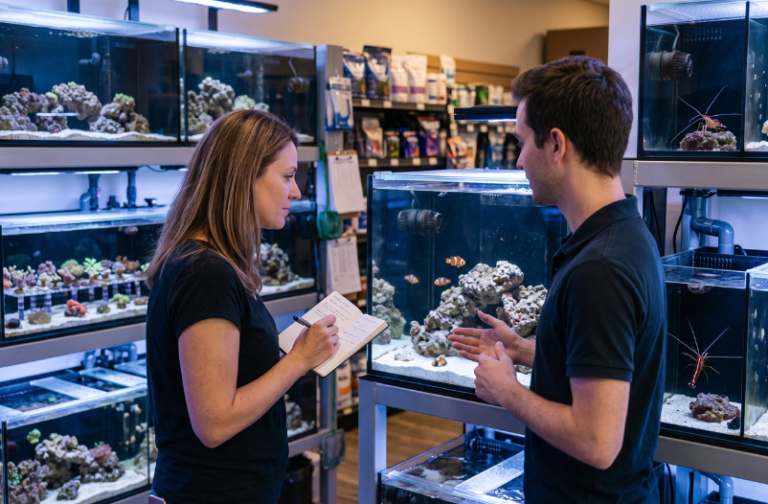
  • What do you want to keep? Fish only, corals, or a mix? Research your must-have animals before choosing the tank.
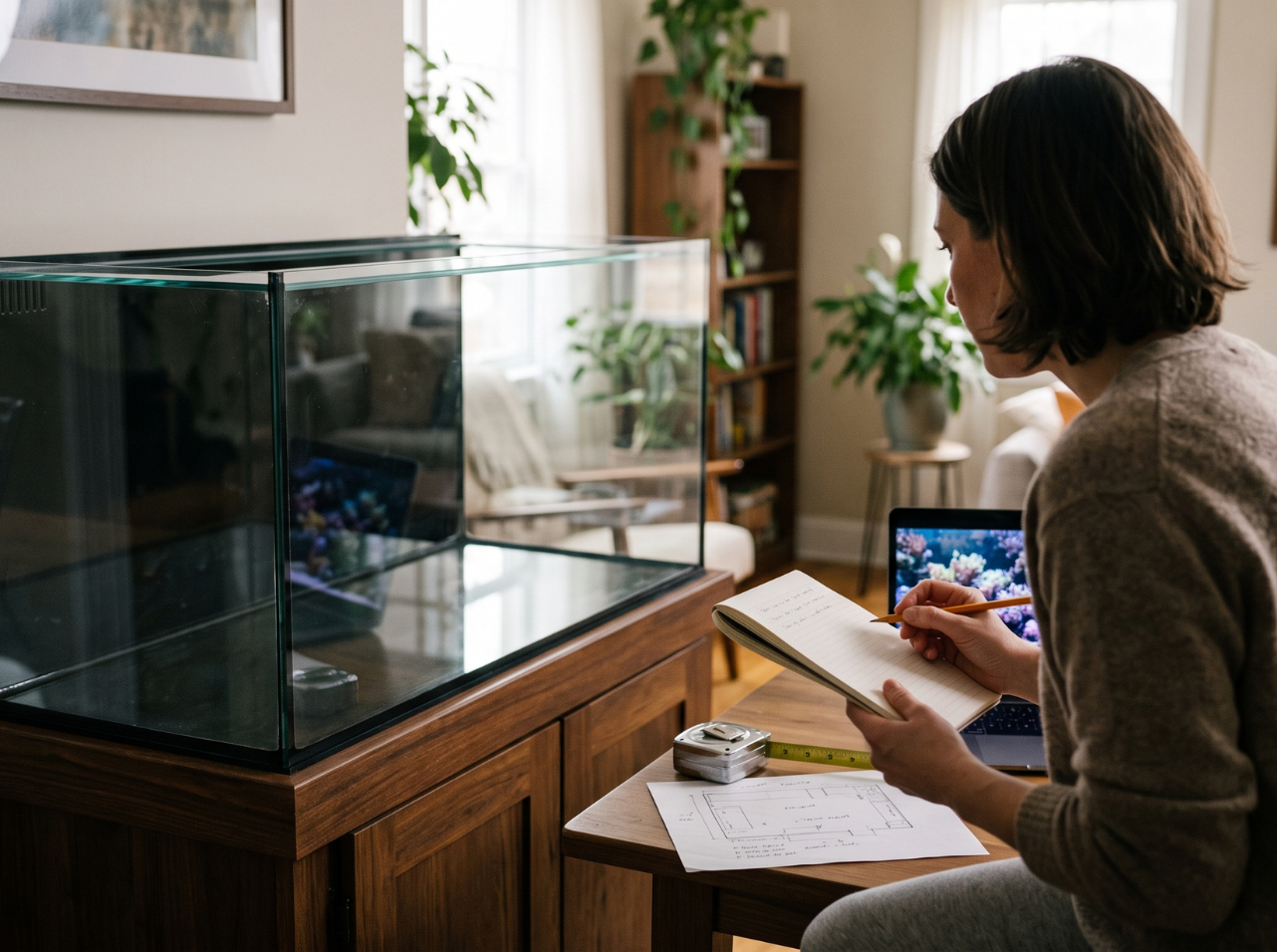
  • Where will it go? Consider room for the aquarium, equipment, and maintenance access.
  • What is your full budget? Include equipment, saltwater, testing supplies, livestock, and ongoing care.
  • How much time can you give it? Choose a setup that fits your routine.
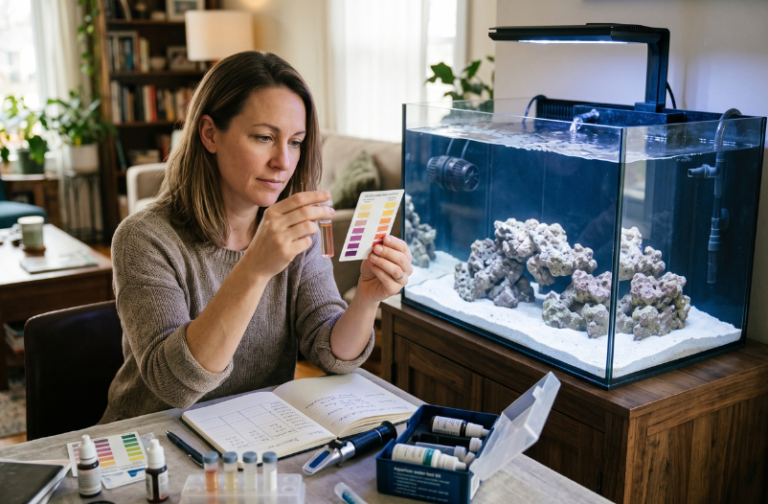
  • What will you need to learn? Understand cycling, water testing, and the care requirements of your intended livestock before bringing animals home.

There are many ways to build a successful aquarium. We’ll walk you through the planning decisions and share lessons from our coral systems to help you develop a plan that works for you.

Make a Simple Tank Plan

Write down your preferred aquarium size, the animals you hope to keep, your startup budget, and your monthly maintenance budget. You don’t need every answer yet—this gives you a starting point and shows you what still needs research.

Budget Beyond the Aquarium

The tank is only part of the expense. Plan for a suitable stand, lighting, filtration, water movement, temperature control, salt mix, a freshwater source, water-testing supplies, and a way to measure salinity. Your equipment choices will depend on the setup and livestock you choose. Leave room in your budget for replacement supplies and unexpected needs.

Plan for Everyday Life

Think about where you’ll prepare water, store supplies, and handle maintenance. Who will care for the aquarium when you travel? A setup that is convenient to maintain is easier to keep up with.

Common Planning Mistakes to Avoid

  • Buying animals before researching their adult size and care needs.
  • Choosing equipment based only on the lowest price.
  • Spending the entire budget on the tank and leaving nothing for upkeep.
  • Trying to add everything at once.
  • Copying someone else’s setup without understanding why it works.

Your Next Step

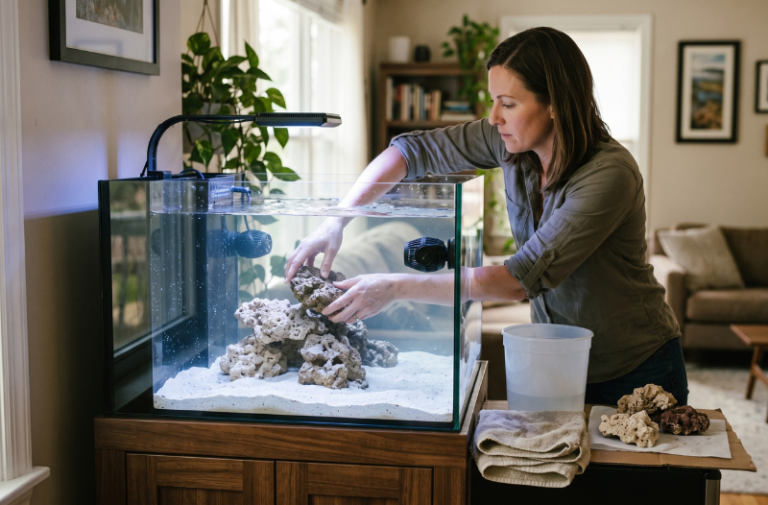
Once you have a basic plan, move on to Set It Up, where we’ll explain how the equipment comes together and introduce the cycling process.

Tags

What do you think?

Leave a Reply

Your email address will not be published. Required fields are marked *

Related Articles