You have a plan—now it’s time to bring your aquarium together. Take this stage one step at a time. Setting up your equipment, checking that everything works, and beginning the cycling process lays the groundwork for the animals you’ll eventually keep.
There are several ways to build a saltwater aquarium. This guide gives you a starting point; follow your aquarium and equipment manufacturers’ instructions for your particular setup.
1. Get Your Supplies Together
Before you start, check that you have:
- An aquarium and stand designed to support it when filled.
- Filtration appropriate for your setup.
- A heater and thermometer, plus a cooling plan if needed.
- Suitable water movement.
- Lighting matched to your intended livestock.
- Aquarium rock and sand, if your plan includes sand.
- Marine aquarium salt mix and an appropriate freshwater source.
- A calibrated instrument for measuring salinity.
- Saltwater-compatible water tests.
- Dedicated buckets and tools for aquarium use.
Some systems need additional equipment. An all-in-one aquarium, a tank with a sump, and a simple fish-only setup won’t have identical shopping lists.
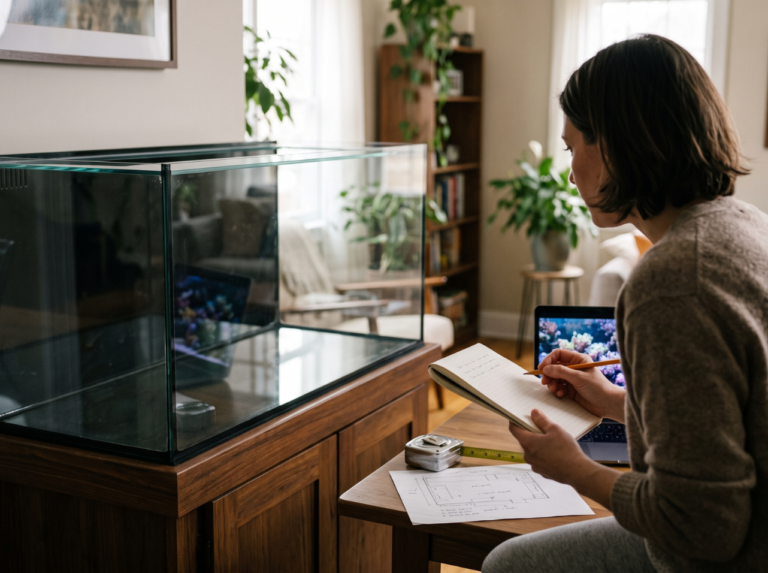
2. Position and Inspect the Aquarium
Place the aquarium on a level, suitable stand, following the manufacturer’s support requirements. Leave enough room to reach equipment and perform maintenance.
Inspect the tank, plumbing, and connections before filling. Follow the manufacturer’s leak-testing instructions and resolve any problems before adding saltwater.
Arrange electrical cords with drip loops and keep plugs and power connections protected from splashes.
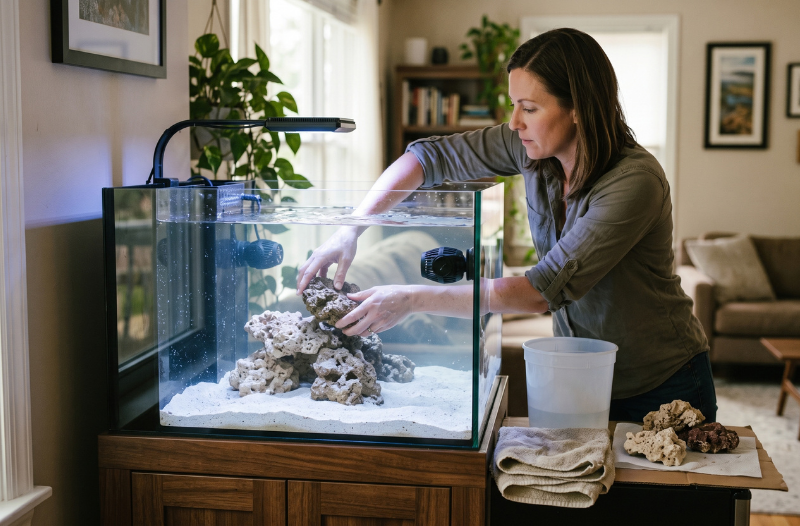
3. Build Your Rock Layout
Arrange your rockwork so it is stable, with space for water movement and maintenance access. Think ahead about hiding places for fish and room for corals to grow.
Avoid balancing rocks where they could easily shift or fall. Use aquarium-safe materials if you need to secure the structure.
If you’re adding sand, follow its preparation instructions. Different products may have different rinsing requirements.
4. Prepare Your Saltwater
Use water suitable for a marine aquarium, commonly RO/DI water, and a marine aquarium salt mix. Prepare it in a clean, aquarium-only container according to the salt manufacturer’s instructions.
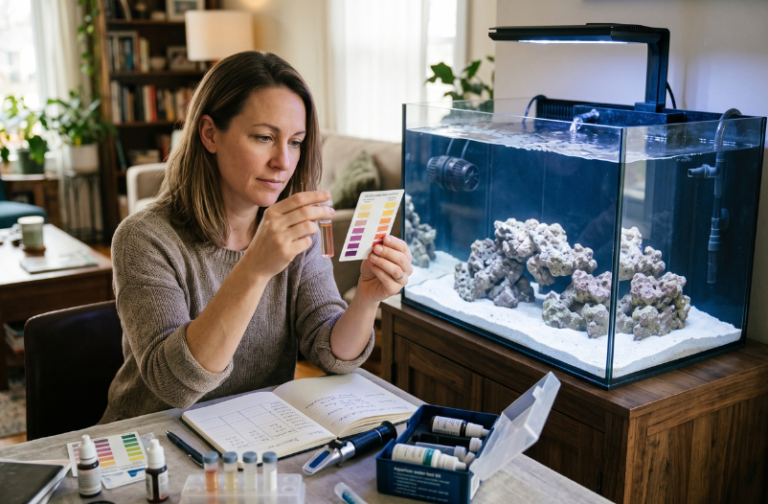
Check salinity with a calibrated instrument and confirm the temperature before use. Choose target conditions appropriate for the animals you intend to keep.
Keep notes on how you prepare your water so you can repeat the process consistently.
5. Start and Check Your Equipment
Once the aquarium is filled to its proper operating level, start the equipment according to its instructions.
Check that:
- Water is circulating through the system.
- Plumbing and connections are dry.
- Temperature control is working.
- Pumps and filters operate correctly.
- You can reach equipment for cleaning and servicing.
For systems with a sump, check the shutdown and restart behavior so you understand how water levels change when the return pump stops.
6. Begin a Fishless Cycle
Cycling establishes the biological filtration that processes ammonia from aquarium waste. A fishless method lets you begin this process without exposing fish to cycling conditions.
Use a defined fishless-cycling method and follow its instructions for the bacteria product, ammonia source, dosing, and testing. Aquarium cycling ammonia belongs only in a system without livestock—never add it to a tank containing fish, corals, or other animals. DrTim’s Aquatics
7. Keep a Simple Record
Record your setup date, equipment settings, temperature, salinity, and cycling test results. Include any products added and their amounts.
These notes help you understand changes and make it easier to ask for useful advice. Follow the testing schedule for your chosen cycling method rather than guessing when to add more products.
Common Setup Mistakes to Avoid
- Adding livestock before checking readiness.
- Using containers or tools that have held household chemicals.
- Leaving unstable rockwork.
- Guessing salinity instead of measuring it.
- Combining cycling instructions from different products.
- Making several changes at once without keeping notes.
Your Next Step: Check Readiness
Getting the equipment running is an important milestone, but it’s only part of preparing an aquarium for livestock. Our Check Readiness guide will help you review your cycling results, equipment performance, and the needs of the animals you hope to add.
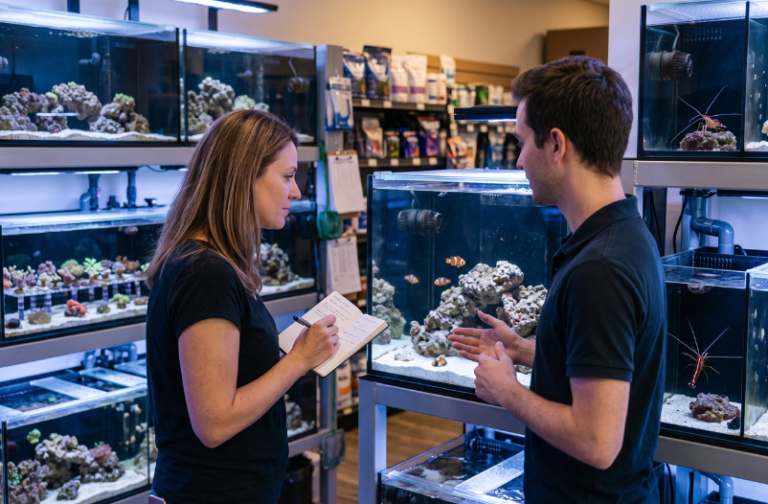
Have a question along the way? Contact Fishfanatix. We’re here to share our experience and help you think through your setup.