Your aquarium is assembled and running. Now it’s time to check whether it can support the animals you want to keep.
Readiness depends on your cycling results, stable conditions, working equipment, and the needs of your intended livestock. Clear water and a certain number of days on the calendar don’t tell the whole story.
1. Review Your Cycling Results
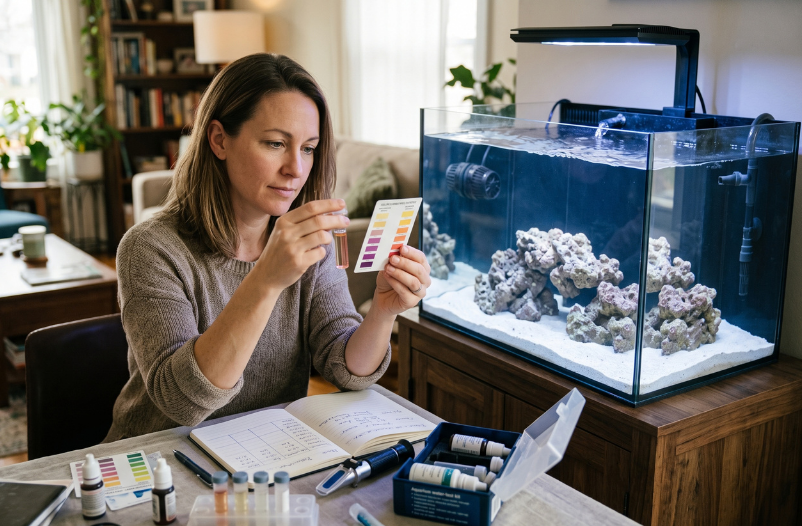
Follow the completion criteria for the fishless-cycling method you used. Review your test records to confirm that the biological filtration is processing the ammonia source as expected.
A zero ammonia reading alone doesn’t prove that cycling is complete if no ammonia source was introduced. Follow your method’s testing instructions rather than adding more products or livestock based on a guess.
Once animals are present, never add cycling ammonia to their aquarium.
2. Check Temperature and Salinity
Measure temperature and salinity regularly and record the results. Look for consistency across several days, rather than relying on one reading.
Use a calibrated salinity instrument and choose conditions suited to your intended animals. If readings fluctuate, investigate the cause before buying livestock.
Establish how you’ll replace evaporated water. Evaporation leaves salt behind, so routine evaporation top-offs use appropriate freshwater rather than additional saltwater.
3. Match Your Tests to Your Livestock
Understand what your test results mean and which measurements matter for the animals you plan to keep.
Along with cycling tests, review salinity, temperature, pH, and nutrients. For a reef aquarium, learn how alkalinity, calcium, and magnesium relate to coral care.
Avoid chasing a number by repeatedly adding products. Confirm unexpected readings, understand the cause, and make deliberate adjustments.
4. Check the Equipment Again
Before adding animals, confirm that:
- Filtration and water movement are functioning.
- Temperature control is reliable.
- Plumbing and connections remain dry.
- Lighting is suitable for the livestock you’ve chosen.
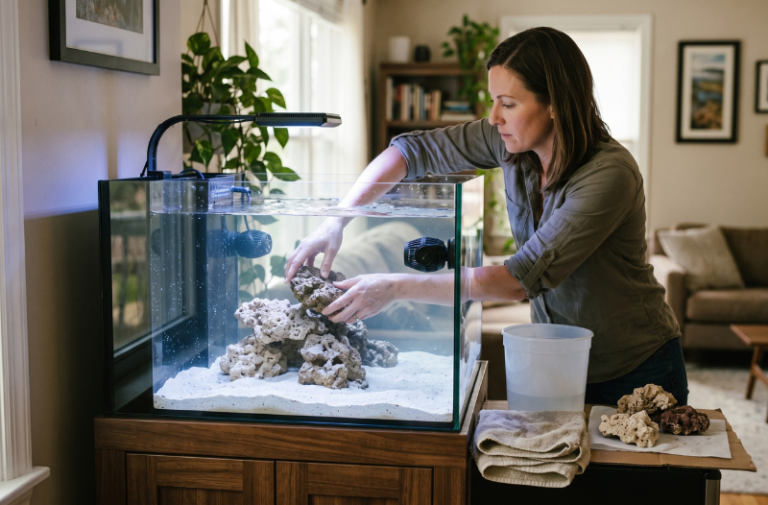
- Rockwork is secure.
- Equipment is accessible for maintenance.
- You understand what happens during a power interruption and restart.
Fix unresolved equipment problems before bringing animals home.
5. Remember: Cycled Doesn’t Mean Ready for Everything
Completing the initial cycle is one milestone. It does not mean a new aquarium is ready for every fish, coral, or invertebrate.
Some animals need an established food supply, greater stability, specialized equipment, or more experience. Research the exact species you want to keep rather than assuming that every animal labeled “beginner-friendly” fits your tank.
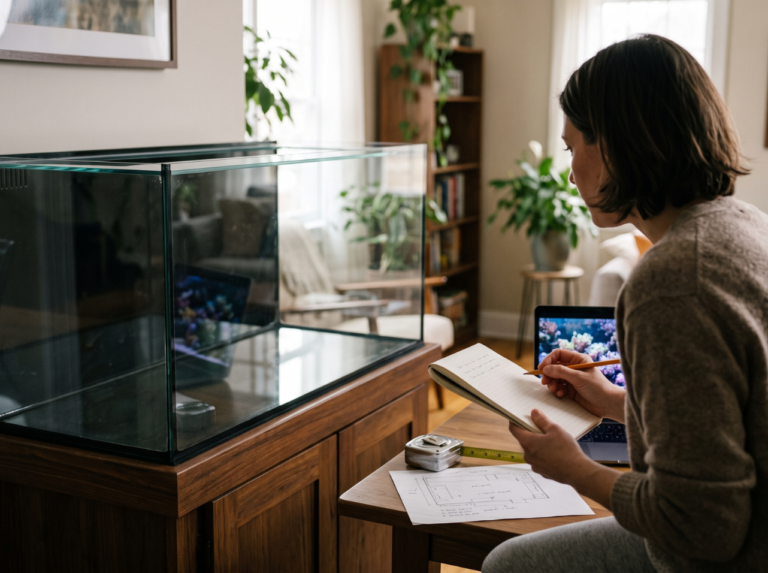
6. Have a Care Plan Ready
Before purchasing your first animals, know:
- What they eat and how you’ll feed them.
- How you’ll acclimate them.
- What quarantine or observation approach you’ll use.
- How often you’ll test and maintain the aquarium.
- Who will care for it when you’re away.
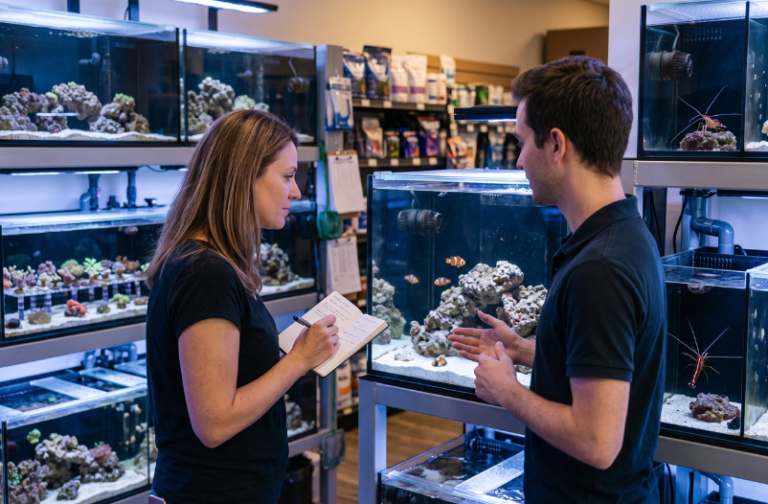
- Where you’ll get help if something looks wrong.
Buy necessary care supplies before you need them.
7. Add Livestock Gradually
Choose a modest first addition that fits your aquarium and experience. Give yourself time to observe the animals and monitor the system before adding more.
Your stocking plan should account for adult size, behavior, compatibility, and the aquarium’s ability to handle the additional feeding and waste.
Your Readiness Checklist
Before you shop, ask yourself:
- Have I met my cycling method’s completion criteria?
- Are temperature and salinity consistent?
- Do I understand my water-test results?
- Is my equipment working reliably?
- Can I meet the specific needs of my first animals?
- Do I have a feeding, maintenance, and introduction plan?
If an answer is unclear, pause and work through it. Waiting gives you time to resolve problems before animals depend on the aquarium.
Your Next Step: Choose Livestock
Once your aquarium is ready for its intended inhabitants, explore Choose Livestock. We’ll help you think through care requirements, compatibility, and choosing animals that fit your setup.
Have questions about your results or what to check next? Contact Fishfanatix with your tank details, setup date, equipment, and recent readings. That information gives us a useful starting point for helping you.